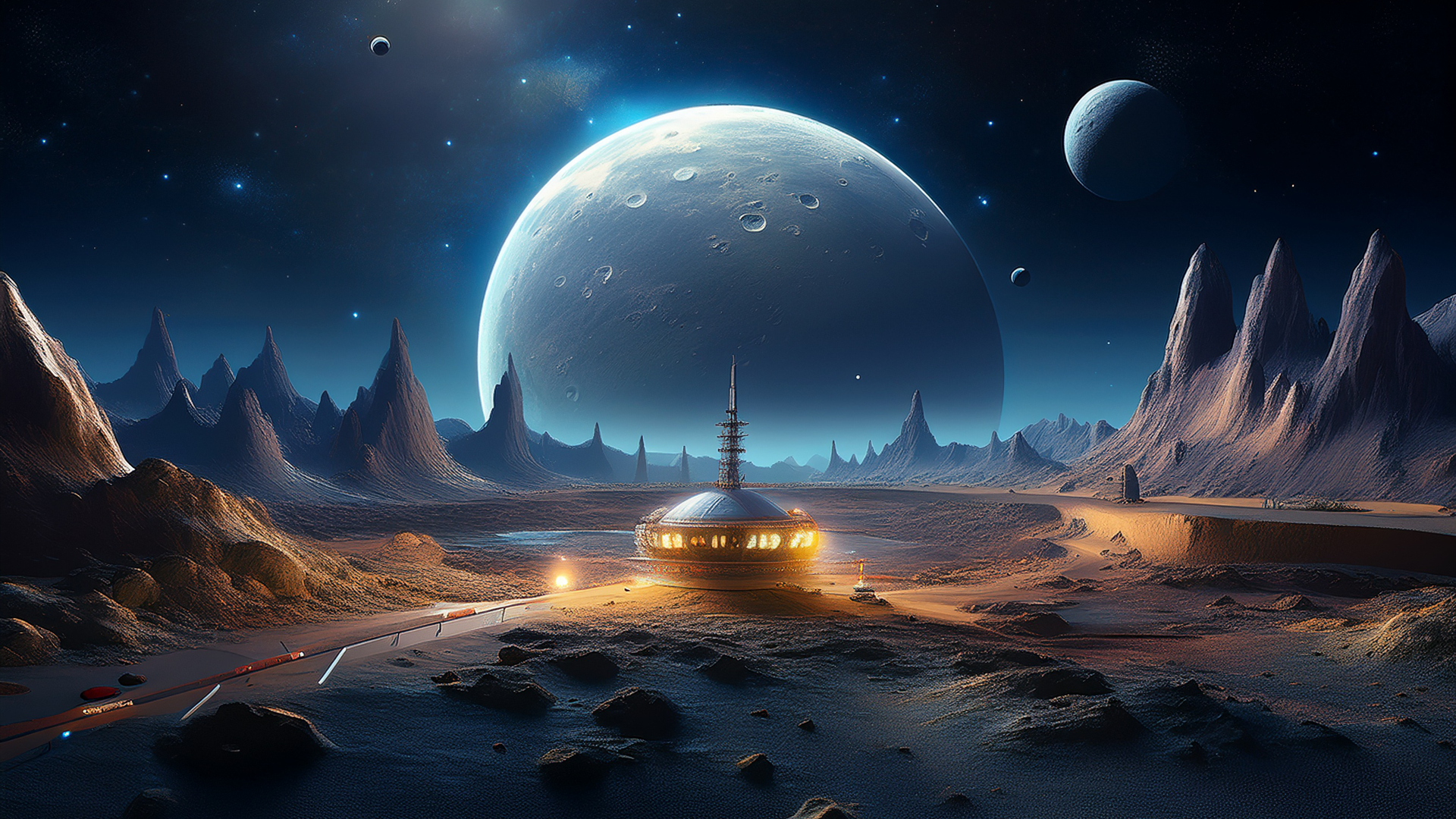
Welcome to Moonmania, where gravity is low and adventure is high.
The Moon isn’t just a light in the sky — it’s a world of giant craters, dusty plains, and legendary first footsteps. It’s where humans learned to leap beyond limits and dream bigger than ever before.
Ready to take one small step into wonder?
Unlock Fun Facts About the Moon,
Did you know the Moon has “moonquakes” that can shake its surface? Or that its gravity is so light you could jump six times higher than on Earth? With our fun-fact accordion, you’ll uncover surprising and fascinating details about our closest celestial neighbor — sparking curiosity and inspiring your own lunar adventures!
Fun Facts
Explore amazing trivia about the Moon and ignite your curiosity.
Only 12 people (all American Apollo astronauts) have walked on the Moon, between 1969 and 1972. Their footprints and equipment are still there, preserved in the vacuum.
It causes tides on Earth through its gravitational pull, and it has helped stabilize Earth’s axial tilt, contributing to relatively stable climates that supported life.
The Moon is roughly one-quarter the diameter of Earth (about 3,475 km or 2,159 miles across). If Earth were the size of a nickel, the Moon would be like a coffee bean next to it.
The Moon is tidally locked to Earth, meaning it takes the same amount of time to rotate on its axis (about 27.3 days) as it does to orbit Earth. This is why we always see the same side (the “near side”) from our planet
The Moon doesn’t produce its own light; it shines by reflecting sunlight. That’s why its surface actually appears quite dark when viewed up close, despite looking bright in our night sky.
Its surface is covered in regolith (fine, powdery dust) and scarred by thousands of impact craters from billions of years of asteroid and comet strikes. The dark patches we see are ancient lava plains called maria (“seas”), formed when volcanic activity filled huge basins
It is slowly drifting away from Earth at a rate of about 3.8 cm (1.5 inches) per year due to tidal interactions. In billions of years, total solar eclipses (where the Moon perfectly covers the Sun) will no longer be possible.
The leading theory for its origin is the giant impact hypothesis: about 4.5 billion years ago, a Mars-sized body (often called Theia) collided with early Earth, ejecting debris that eventually coalesced into the Moon.
Explore Our Mars Essentials
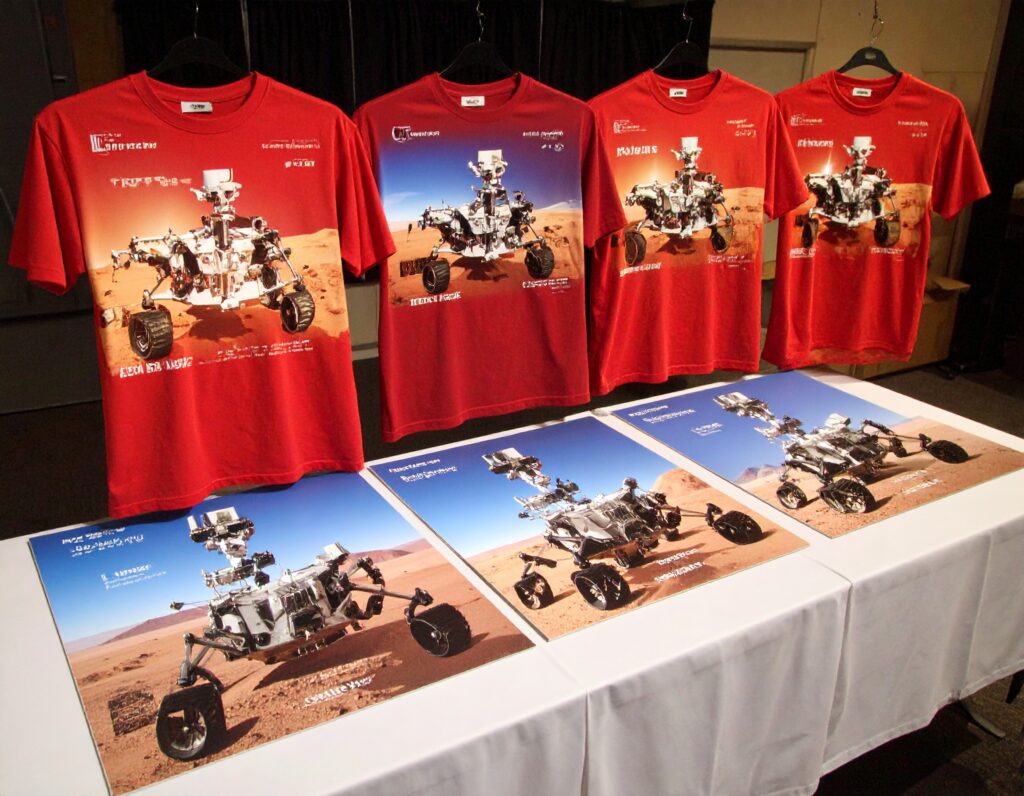
Discover unique products inspired by the spirit of Mars.
Mars Rover Model
22$
Martian Mug
22$
Space Suit Shirt
22$
Alien Plush Toy
22$
What Our Customers Say
"Moonmania made me fall in love with space all over again. The facts are fascinating, the design is out of this world, and I learned things I never knew about our closest neighbor!"
— Sarah M.
"I visited with my kids and we couldn’t stop clicking through the fun facts. It’s educational without feeling like school — just pure curiosity and wonder."
— David L.
Join the Moonmania Adventure Today!
Explore thrilling Moon-themed products that ignite your curiosity and passion for space.